Argumentative theories of reason
Sellars, Brandom, Mercier, Sperber, and the robot machine god
2024-12-19 — 2026-11-17
Wherein Henry Farrell Cites Mercier and Sperber, Motivated Reasoning Is Unmasked as an Evolutionary Feature for Social Persuasion, and Individual Biases Are Corrected Through the Necessary Critiques of Others.
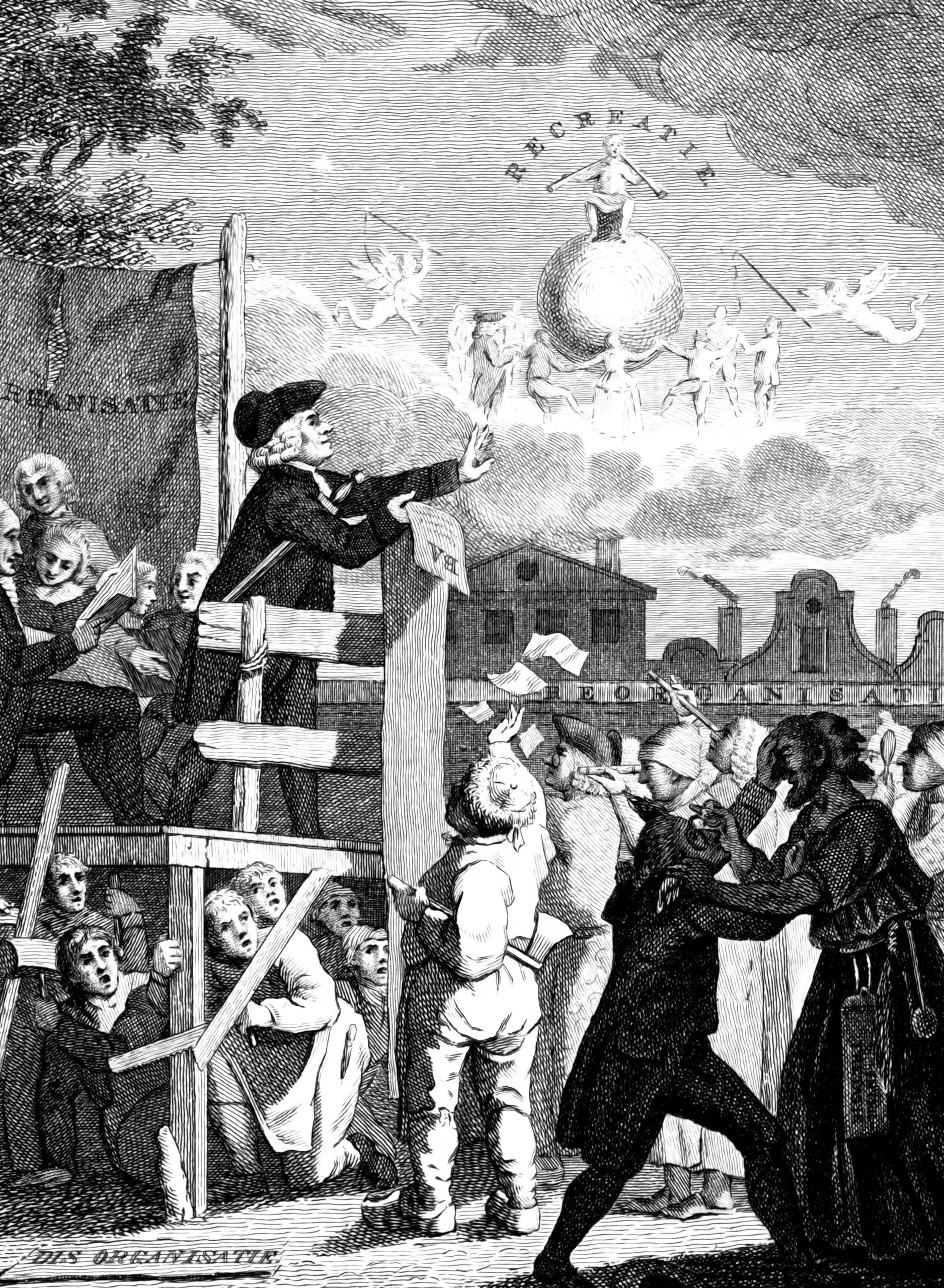
A placeholder to discuss various theories of reasoning that ground out in the persuasive, social or justificatory nature of expressed reason. This seems especially relevant to the modern Large Language Model era, we should really look into it. I mean, we are, collectively, but I do not feel so much that we have nailed it yet.
Adams (1988):
“Well,” he said, “it’s to do with the project which first made the software incarnation of the company profitable. It was called /Reason/, and in its own way it was sensational.’
“What was it?”
“Well, it was a kind of back-to-front program. It’s funny how many of the best ideas are just an old idea back-to-front. You see there have already been several programs written that help you to arrive at decisions by properly ordering and analysing all the relevant facts so that they then point naturally towards the right decision. The drawback with these is that the decision which all the properly ordered and analysed facts point to is not necessarily the one you want.”
“Yeeeess…” said Reg’s voice from the kitchen.
“Well, Gordon’s great insight was to design a program which allowed you to specify in advance what decision you wished it to reach, and only then to give it all the facts. The program’s task, which it was able to accomplish with consummate ease, was simply to construct a plausible series of logical-sounding steps to connect the premises with the conclusion.
“And I have to say that it worked brilliantly. Gordon was able to buy himself a Porsche almost immediately despite being completely broke and a hopeless driver. Even his bank manager was unable to find fault with his reasoning. Even when Gordon wrote it off three weeks later.”
1 Argumentative Theory of Reasoning
The Argumentative Theory of Reasoning proposes that human reasoning evolved not primarily for individual problem-solving or truth-seeking, but as a means of argumentation—specifically to persuade others and to evaluate arguments in social contexts. Highlights:
- Evolutionary perspective: Reasoning developed as an adaptation for social living, where cooperation and persuasion play vital roles.
- Persuasion: It helps us develop and present arguments that convince others, strengthening group cohesion and collective decision-making.
- Bias and motivated reasoning: Our cognitive biases (confirmation bias, myside bias) aren’t evolutionary bugs but features that support argumentation—helping us build cases for our viewpoints.
- Group benefits: Although reasoning is often biased at the individual level, debate and critique within groups can lead to better collective outcomes, because poor arguments get challenged and strong ones get refined.
Over at the rhetoric notebook I quoted Henry Farrell summarising some Mercier and Sperber as follows
First — that reasoning has not evolved in the ways that we think it has — as a process of ratiocination that is intended independently to figure out the world. Instead, it has evolved as a social capacity — as a means to justify ourselves to others. We want something to be so, and we use our reasoning capacity to figure out plausible seeming reasons to convince others that it should be so. However (and this is the main topic of a more recent book by Hugo (Mercier 2020)), together with our capacity to generate plausible sounding rationales, we have a decent capacity to detect when others are bullshitting us. In combination, these mean that we are more likely to be closer to the truth when we are trying to figure out why others may be wrong, than when we are trying to figure out why we ourselves are right. …. We need negative criticisms from others, since they lead us to understand weaknesses in our arguments that we are incapable of coming at ourselves, without them being pointed out to us.

2 Inferentialism
The logical structured part of language games, as set up by (R. Brandom 1994; R. B. Brandom 2009; Sellars 1954, 1956).
TfE: On Post-Searlean Critiques of LLMs – DEONTOLOGISTICS on inferentialism:
I think the core component of meaning is given by the role sentences play in ‘the game of giving and asking for reasons’ and the contributions component words make to these inferential roles.
🚧TODO🚧