The language game
Coevolution of words and meanings
2014-12-29 — 2026-08-31
In Which the Classification of Feline-Adjacent Phenomena Is Mandated, the Buddha-Nature of a Chihuahua Is Mistaken for a Muffin, and the Vanity of Conceptual Analysis Is Salvaged by the Logic of Training Sets.
Semantics in a communicative context. I suspect that semantics in a communicative context is a special case of the ecology of mind.
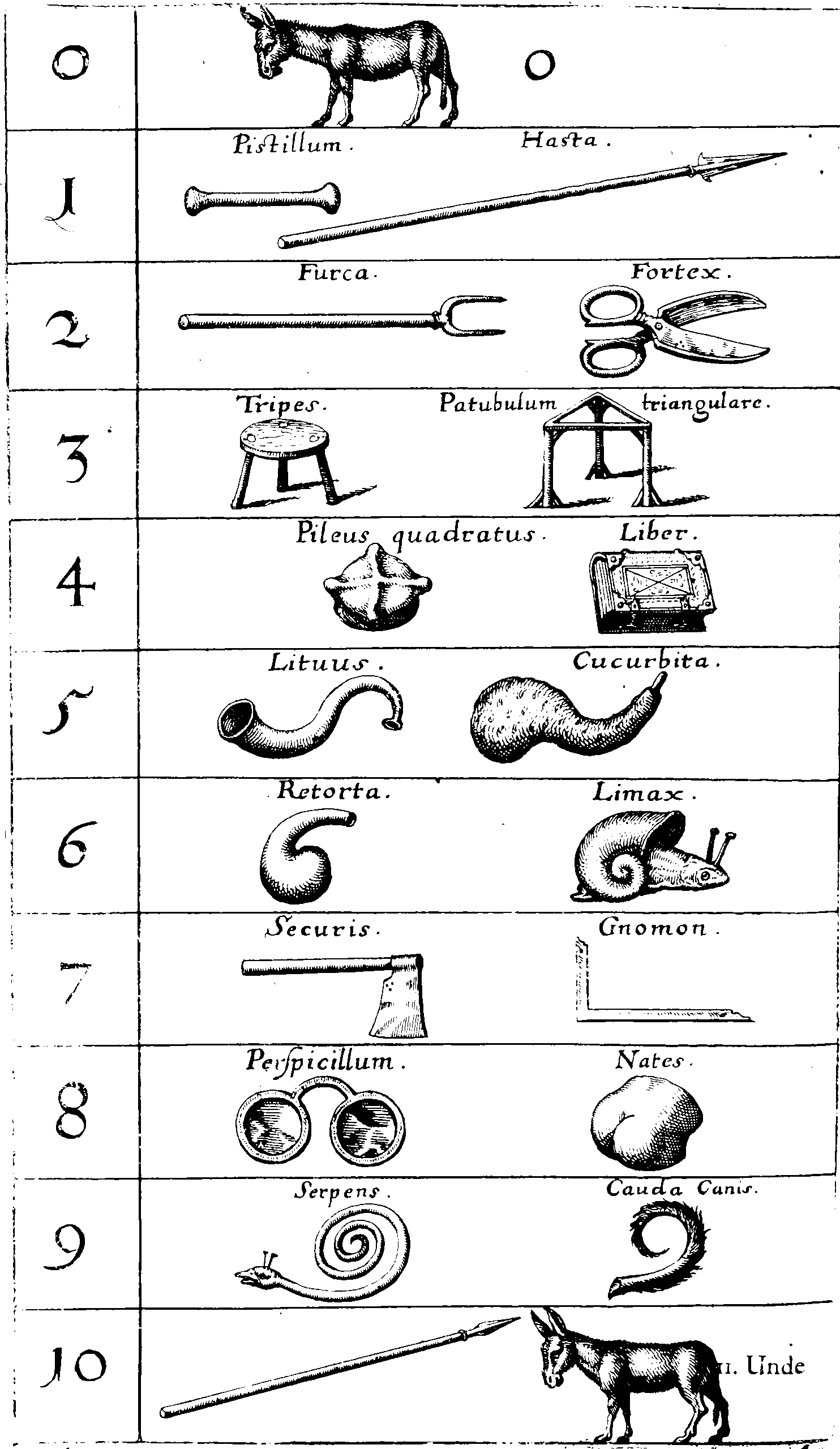
1 Semantics is solved you guys
Have you talked with philosophers recently? Philosophers be all like
- Do machines have free will?
- Are machines conscious?
- Can I see the same colours as a mantis shrimp?
Great news, everyone: questions like these are all totally solved! In case you missed the memo, I’ll share the canonical solution to semantics here.
Collectively, speakers of a language have learned a mapping between words and their referents by observing phenomena and discussing them. If you’ll forgive me for bulldozing some interesting fine detail, I assert that a good enough model for the phenomena is a large fixed data set comprising more-or-less everyday human experience (smells, tastes, scenes, proprioceptive twinges, whatevs). Now, obviously, a lot happens when we learn to map from sensory experience to words. That is a whole thing I won’t attempt to solve here, but, you know, we humans clearly do pretty great at it, as do machines these days.
I claim we approximate this process of learning words as a classifier, a function that maps from sensory experiences to words, trained on the distribution of everyday human experiences.
Write \(\mathcal{X}\) for the space of phenomena and let each phenomenon have a frequency of occurrence in the world, \(p(x)\). We use \(V\) for a finite vocabulary to describe these. Not all things have names, and not all names are useful, so we will assume that \(|V|\) is much smaller than \(|\mathcal{X}|\), and “I dunno” is a valid label for a phenomenon. Suppose some stimuli occur often enough and are useful enough that humans name them. Everyday human experience is a joint distribution \(p(x, w)\) over \(\mathcal{X}\times V\), the propensity of a competent speaker subject to stimulus \(x\) to assign label \(w\) to it. \(w\) means \(x\) if \(p(w\mid x)\) is high.
Any given learner \(j\) sees a finite sample \(\mathcal{D}^j=\{(x^j_i,w^j_i)\}_{i=1}^{n}\) of (stimulus, word) pairs and fits a tractable model \(\hat p_{\mathcal{D}^j}(w\mid x)\) to it — the member of some family \(\mathcal{F}\) of candidate classifiers \(q(w\mid x)\) that maximizes the likelihood of the classifications of words actually heard,
\[\hat p_{\mathcal{D}^j} \;=\; \arg\max_{q\in\mathcal{F}}\;\sum_{(x^j_i,w^j_i)\in\mathcal{D}^j} \log q(w^j_i \mid x^j_i).\]
The meaning of a given word for a given learner \(j\) is the set of phenomena that the learned model is most likely to assign that word to,
\[\llbracket\,w\,\rrbracket_{\mathcal{D}^j} \;=\; \bigl\{\, x\in\mathcal{X} \;:\; w=\arg\max_{w'\in V}\,\hat p_{\mathcal{D}^j}(w'\mid x) \,\bigr\}.\]
That was a lot of equations which might seem abstruse, but fear not, it all cashes out into something simple, intuitive, and above all, effective, insofar as a huge slice of the AI industry gets its trillions of dollars of valuation from elaborations of this idea. It works, if we count “accumulating extreme bank” as something unlikely to be correlated with “not working at all”.
Ok, practicalities: Imagine you and I come from the same town and the main language spoken in the town is English. Your corpus \(\mathcal{D}^j\) and mine \(\mathcal{D}^k\) are not identical, but a shared town and language means both are samples from almost the same \(p(x,w)\). My meaning for a given word is the region in phenomena-space \(\llbracket\,w\,\rrbracket_{\mathcal{D}^k}\); yours is \(\llbracket\,w\,\rrbracket_{\mathcal{D}^j}\), i.e. the same up to a difference in the training data we each sampled from the world. We understand each other about \(w\) to the extent those two regions coincide, and we disagree on the phenomena that fall in one region but not the other, depending on the idiosyncrasies of our respective corpora.
Aggregating over the vocabulary, our miscommunication rate is the probability that we assign different labels to the same phenomenon,1
\[\Pr_{x\sim p(x)}\!\left[\,\hat w_{\mathcal{D}^k}(x)\neq\hat w_{\mathcal{D}^j}(x)\,\right],\qquad \hat w_{\mathcal{D}^k}(x)=\arg\max_{w'\in V}\hat p_{\mathcal{D}^k}(w'\mid x).\]
Since \(\mathcal{D}^j\) and \(\mathcal{D}^k\) are drawn from the same \(p(x,w)\), that probability is small for most words: we typically assign the same words to the same phenomena. Generally our vocabularies nearly agree because our corpora nearly do, since we learned words from similar experiences by living in the same time and place. The disagreements that remain are the rare phenomena, where neither corpus held enough examples to settle which word applies, or maybe where the usage itself is ambiguous. So I might think a whale is not a fish because it has mammary glands making it a mammal, and you might think it is a fish because it lives in the water. Is one of us right? Meh. It depends on what meaning we learned to assign to “right” from our training data. Maybe you learned to respect the dictionary, and I am all about descriptivism. Maybe we have both converged to the ML understanding, which is to simply understand the ground truth labels as the most common over a common training corpus.
So far so good. But! I didn’t say what nameable “phenomena” were, and if we unpack that a little further we can understand disagreement at a deeper level. In practice, labeling phenomena in the world is a social and sensory process. The label is something we usually agree on, and the phenomenon itself is something we can readily perceive, like “living in the ocean”, or “having mammary glands” (God help amateurs who try to find whale tits though).
For example, we might say that “furry things that like sardines and purr” are “cats”. In machine learning, phenomena like “fur” and “purr” are features. Insofar as they co-occur often enough in the world, and we care to discuss them with other speakers of our language, we might label their co-occurrence in English as cat. If nature is kind to us, then there might be some latent cause that explains the co-occurrence of those features.
Now, cheetahs have fur and can purr. Are they truly cats?
This is an underspecified question.
If we both grew up in ignorance of cheetahs, we learned the word “cat” without reference to them. Its scope is simply undefined when we learn the world also contains cheetahs. We then get to choose whether to extend the word to cover cheetahs—which boils down to persuading other language users to accede—or to invent a new word for them, or, like, to invent a phylogenetic justification for whichever label we ultimately choose.
And maybe wholly new phenomena arise that don’t fit into our existing library of features? What if there are more phenomena in heaven and earth than are dreamt of in our philosophy?
Words are undefined outside their training distribution. We can give them particular meanings by extending them to new phenomena, but we cannot discover their meanings. No-one is a realist about words.
I am getting this printed on cards for emergency escapes from any debate about what “true” agency is, or free will, or what consciousness is, or whether I see the “same” colours as the mantis shrimp.
Now I have a hard one for you:
- Does a dog have Buddha nature?

2 Other formalizations
What words can be shared between people?
(Baronchelli et al. 2010; Loreto, Mukherjee, and Tria 2012) present a toy model for colour words—a clever choice of domain with something like a continuously indexed ground truth, 5 stars.
(Steyvers and Tenenbaum 2005) draws a connection to categorical stochastics and evolutionary models.
Eisenstat (2025) proposes an information-theoretic model of meaning learning as “shared latents” in the probabilistic ML sense. I think of this as a convergent abstraction argument.
3 Incoming

4 References
Footnotes
I am skipping over demarcation disputes about what constitute phenomena, but I think this does not materially change the argument.↩︎