Voting systems
Mathematics and economics of aggregate group preferences; the will of the people (whatever that might be); social choice theory
2014-09-22 — 2026-09-29
In Which First-Past-the-Post Is Abandoned as a 1700s Relic, Approval and Condorcet Methods Are Appraised by Bayesian Regret, and Quadratic Voting and Sortition Are Salvaged as Remedies for Democratic Malaise.
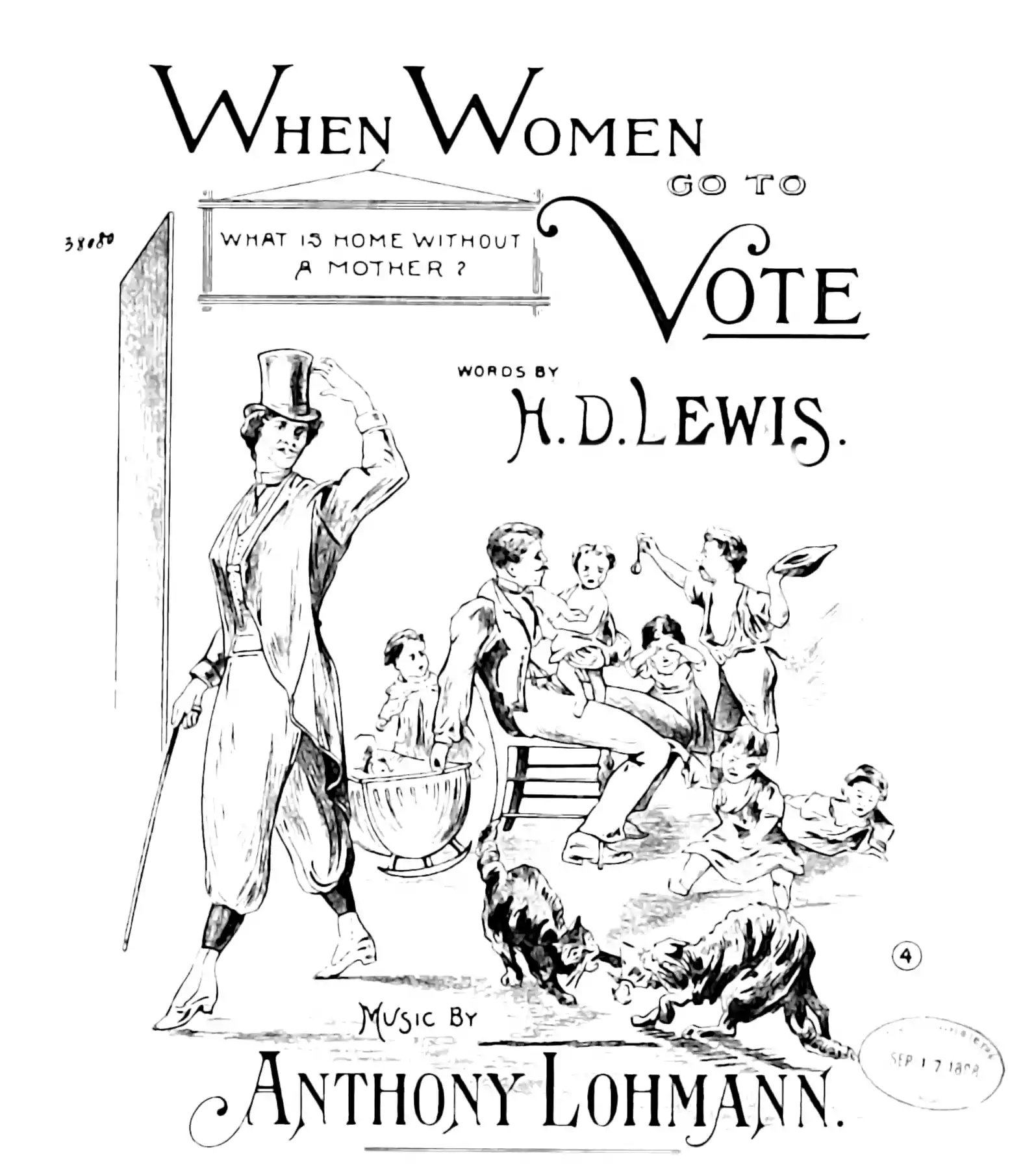
There’s plenty of interesting mathematics surrounding this democracy business and its shortcomings. We should probably insert a few disclaimers about the complicated relationship between is and ought, and model and actuality. Anyway… I’ll look at that here. I’ll leave whining about modern democratic failure to capitalism’s end game and leave practical analysis to psephology.
1 Impossibility results
Arrow-style impossibility theorems
A neat summary by Alex Tabarrok:
We know or should always have known that a group doesn’t have preferences anymore than a group smiles. What Arrow showed, however, is that without invoking special cases we can’t even rationalize group choices as if leviathan had preferences. Put differently, the only leviathan that rationalises group choice has the preferences of a madman.”
See also a snappy analysis on Encyclopaedia of Mathematics.
- The Gibbard–Satterthwaite theorem says, basically, that voting systems are subject to strategic abuse.
- C&C: Condorcet paradox
- C&C: Anscombe impossibility
- C&C: Arrow–Sen
- The brood of descendants of these theorems
If we’re going to decide a single thing (e.g. who is president), we’re in the realm of classical voting.
TL;DR: there is no perfect voting system, but some suck more.
2 Ok perfect voting is impossible but tell me about which ones are extra stupid
Well, it depends upon the problem, in practice.
To Build a Better Ballot is Nicky Case’s incredible voting system visualiser and it communicates all kinds of practical nuance.
But I get it: What if you’re busy and you don’t have time for nuance and you want a simple answer to the question: “Which voting system is best?” by seeing how well it goes with a bunch of randomly generated elections? Well! Can I interest you in Jameson Quinn’s Voter Satisfaction Efficiency (VSE) simulator? It presents Bayesian regret normalized to a more interpretable (0100%)-ish “efficiency” scale, where 100% means the system picks the social-utility optimum in the simulation; 0% means no better than choosing an answer at random. Its definition is
[ (M)=1-. ]
It includes all the big-name modern voting systems: approval/acceptance, IRV/RCV (“preferential voting” to Australians), plurality (First-past-the-post 🤮), score, and Condorcet methods including Schulze and Ranked Pairs.
Other fun explainers
- Smith’s graphical Bayesian-regret results — plotting quality versus the degree of Machiavellian scheming, plus it is a masterclass in year 2000 activist web design aesthetics (oh yes he will sell you his favourite voting system hard)
- Russell Emerine’s voting simulation source code to accompany his Master’s thesis (Emerine 2025), that is also nifty
3 Voting systems of note
3.1 First-past-the-post
a.k.a. plurality. An unbelievably bad way of voting. Mediocre in its best case, and actively incentivizes strategic voting.
Only used by people who democratized at the wrong moment in history and got stuck with 1700s technology, or people who are thoughtlessly copying a bad idea. If a nation-state uses first-past-the-post in 2026, it’s an indicator of a deep malaise in the political system, and I’m so sorry to hear it if that is happening to you. Once we have a first-past-the-post system locked in, e.g. a nation-state, it’s very hard to get rid of it, because the two parties that acquire a duopoly under it are incentivized to keep it because it gives them a good moat against new parties entering the system, and allows them to extract extra value since they are both effectively immune to competition from third parties.
3.2 Preferential
a.k.a. ranked-choice, instant-runoff, single transferable vote, etc.
What we use in Australia most often. It’s pretty good, except it’s too hard to explain.
3.3 Proportional
TBC
3.4 Approval voting
An elegant voting system. I first heard about it from Aaron Hamlin. Special feature: Easily explained.
TBC
3.5 Condorcet methods
TBC
3.6 Vodle/maximum partial consensus
- vodle – everygroup’s consensus (Heitzig and Simmons 2012; Heitzig, Simmons, and Constantino 2025) (source at pik-gane/vodle)
Vodle will help groups make better decisions—fairer, more efficient, more consensus-oriented, interactive, and for free. Its underlying algorithm is based on thorough science and makes sure that all participants get the exact same influence on the decision, and that the power any faction receives is proportional to their size. This distinguishes vodle from almost every other voting app, where even a slight majority can make all the decisions. With vodle, a majority of 51% has only 51% power rather than 100%. In vodle, voters can give all options a “wap” from 0 to 100 or can choose to delegate their waps of an option to another voter they trust. Based on the waps, vodle will determine the winner in a fair, proportional, and efficient way.
4 Iterated voting
If we think that we live in a society where we might decide many things over time that interact with each other, we might want to consider modelling our voting as an iterative process. I’m sure there are many ways to do this, but the one I have heard most about is Quadratic voting:
Quadratic voting is a rated voting method procedure where voters express the degree of their preferences.[1] By doing so, quadratic voting seeks to address issues of the Condorcet paradox and tyranny of the majority. Quadratic voting works by allowing users to “pay” for additional votes on a given outcome to express their support for given issues more strongly, resulting in voting outcomes that are aligned with the highest willingness to pay outcome, rather than just the outcome preferred by the majority regardless of the intensity of individual preferences. The payment for votes may be through either artificial or real currencies (e.g. with tokens distributed equally among voting members or with real money).[2][1] Quadratic voting is a variant of cumulative voting, which differs in that the weight of a vote is normalised using the sum of squares, rather than the sum of absolute values.
Introduced by Weyl (2017). Made collusion-resistant by Buterin, Hitzig, and Weyl (2019).
5 Sortition
David Chaum makes the case (which I think every statistician would find obvious) that Random-Sample Elections are “far lower cost, better quality, and more democratic”. This is random selection at the level of the representative individuals; we could also consider randomness in voting itself (e.g. vodle)/
TBC
6 In AI alignment
Treating LLM next-token choice as a social-choice problem: see AI alignment to collective values for maximal lotteries, Nash learning from human feedback, and differentiable social choice.
7 Alternatives to/improvements upon voting for deciding things
Markets? (see prediction markets and futarchy in utopian governance) Consensus? (sociocracy, again in utopian governance) Deliberation? (AI-mediated and bridging-based aggregation in civic technology) Belief elicitation rather than preference aggregation? (see Bayesian epistemics) Gestalt mass minds? And what does aggregate when it works — see wisdom of crowds vs groupthink and the extraction-from-strategic-agents view in learning from the madness of crowds.
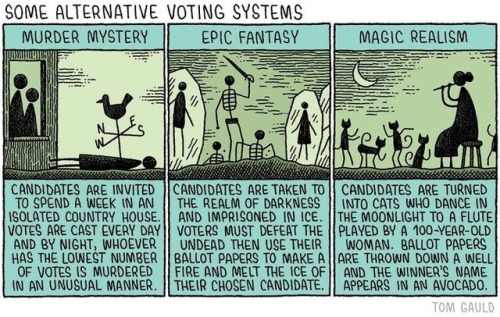
8 Incoming
Public choice theory
To write: a short, necessary disclaimer about how wrong-headed it is to frame group decisions in terms of “optimal” choice (economic optimality is only one of many things we might want from a decision-making process; we might also want stability, agency, fairness, etc.)
Iterated Arrow results across many polls. I think that is the Gibbard-Satterthwaite model?
Oligopolistic game theory in the reverse case—what if parties have incentives to offer a poor range of options to the voters; in essence, what if party systems effectively create cartels? Cost of entry to electoral processes, etc.
Voter models: the fusion of statistical mechanics, graph theory, and a semblance of human behaviour
-
RoboVote is a free service that helps users combine their preferences or opinions into optimal decisions. To do so, RoboVote employs state-of-the-art voting methods developed in artificial intelligence research. […]
For subjective preferences, the approach is known as implicit utilitarian voting. We assume that each participant has a (subjective) utility function that assigns an exact utility to each alternative. Our goal is to choose an outcome that maximises utilitarian social welfare, which is the total utility assigned to the outcome by all participants. […] we only ask for a ranking of the alternatives. […]
[…] For objective opinions, let us focus first on the case where the desired outcome is a ranking of the alternatives. We assume that there is a true ranking of the alternatives by relative quality, and our goal is to pinpoint a ranking that is as close as possible to the true ranking, given the available information.
It implements (Boutilier et al. 2015; Caragiannis et al. 2017; Procaccia, Shah, and Zick 2016)