How to reduce government spying on me
2018-12-11 — 2026-03-05
Wherein the Citizen’s Traffic Is Obscured by Hidden DNS Queries, Bluetooth Is Kept Silent, and Papers Are Conveyed by SecureDrop’s Onion Gate, Whilst Civic Leagues Are Supported.
Many people today are living in surveillance states with weak protections for citizens: persecution of citizens who blow the whistle on state wrongdoing, rapid erosion of privacy, criminalization of failing to become a state informer, even of counselling resistance, and attacks on the free press, all without oversight by the public.
That’s Australia. Things seem worse in Yemen, India, China, Russia, Saudi Arabia, etc. I’ll say it: on balance, strong encryption is a good thing for society—one bulwark against surveillance societies—and for the plain safety of business communication. In practice, we all use consumer-grade encryption, even the army. There are some interesting options for solidarity among software designers, as Eleanor Saitta points out, or, if you prefer, design challenges so stringent that our tech sector is unlikely to meet them.
I’m less and less optimistic that unilateral action to avoid state spying works, as the level of ambient recording goes up and the level of legal protection goes down. Still, we can at least increase the cost.
1 Australian actors
Better yet: change the system. Contribute to our local civil liberties organisation. In Australia that means various entities, some of whom I donate to and recommend to you.
2 Firstly, avoid corporate surveillance
Don’t put our information in the hands of corporations that will sell it to the state. See reducing corporate spying.
Patrick Merer, How to use Facebook if you are a repressive regime. We should bear in mind that, even in notionally democratic regimes, Facebook provides your data to the police without warrants.
3 General skills
EFF’s Surveillance Self Defense course is a good starting point.
They talk us through the theory and practice of different types of security, modelling the risks we face and trying to minimize them for different scenarios.
Maciej Cegłowski observes, discussing the related problem of securing political campaigns:
Campaigns have small budgets and operate in an unusually hostile environment. Not only are there people whose job it is to attack campaigns, but those people enjoy their work, get a government pension when they retire, and live happy, fulfilled professional lives.
I presume (hope?) he’s talking about hostile foreign actors, but who knows these days?
Okay, there is a lot to do, but let’s start with the basics. First, minimize our exposure to corporate surveillance.
Next, we probably want to lock down our computer. Maybe lock down our everyday computer a little bit, and also get a second, hard-core locked-down computer for our secret stuff.
4 Decnet
The “decentralised” internet is a peer-to-peer do-over of the internet which perpetually claims to be on the verge of utility. If it were to succeed that would be interesting for robust community building outside the eye of the state.
5 DNS
Hiding Domain Name System queries makes it harder for us to be profiled based on the sites we visit. See DNS servers.
7 Encryption
7.1 SSH
There’s a lot of fiddling with SSH.
To lock it down, we need to defeat 1024-bit DH keys sigh. The NSA is reading our comms with keys shorter than 2048 bits.
researchers Alex Halderman and Nadia Heninger presented compelling research suggesting that the NSA has developed the capability to decrypt a large number of HTTPS, SSH, and VPN connections using an attack on common implementations of the Diffie-Hellman key exchange algorithm with 1024-bit primes. […] In this post, we present some practical tips to protect yourself from the surveillance machine, whether you’re using a web browser, an SSH client, or VPN software.
7.2 GPG etc
Tedious
7.3 Secure chat
Worth trying. See secure chat.
8 USB
USB is another security nightmare. See e.g. BadUSB malware: O.M.G cable (explanation for the busy), Poisontap, lanturtle usbarmory… We imagine that if the DIY world can so readily destroy us via USB, then state actors are pretty good at it too. Oh, Thunderbolt is broken too. Essentially, peripherals are a disaster.
Countering such attacks? USB condoms such as USG could probably help if we need to use USB, which we do. That is, if we don’t mind carrying a large, inconvenient device whose job is to reduce the functionality and speed of our peripherals. Few of us feel likely enough to be targeted that this is worth doing, although as the cost of these attacks keeps dropping, that might change.
9 Hardened Desktop OS
See hardened OSes.
10 Hardened smartphones
See hardened smartphones.
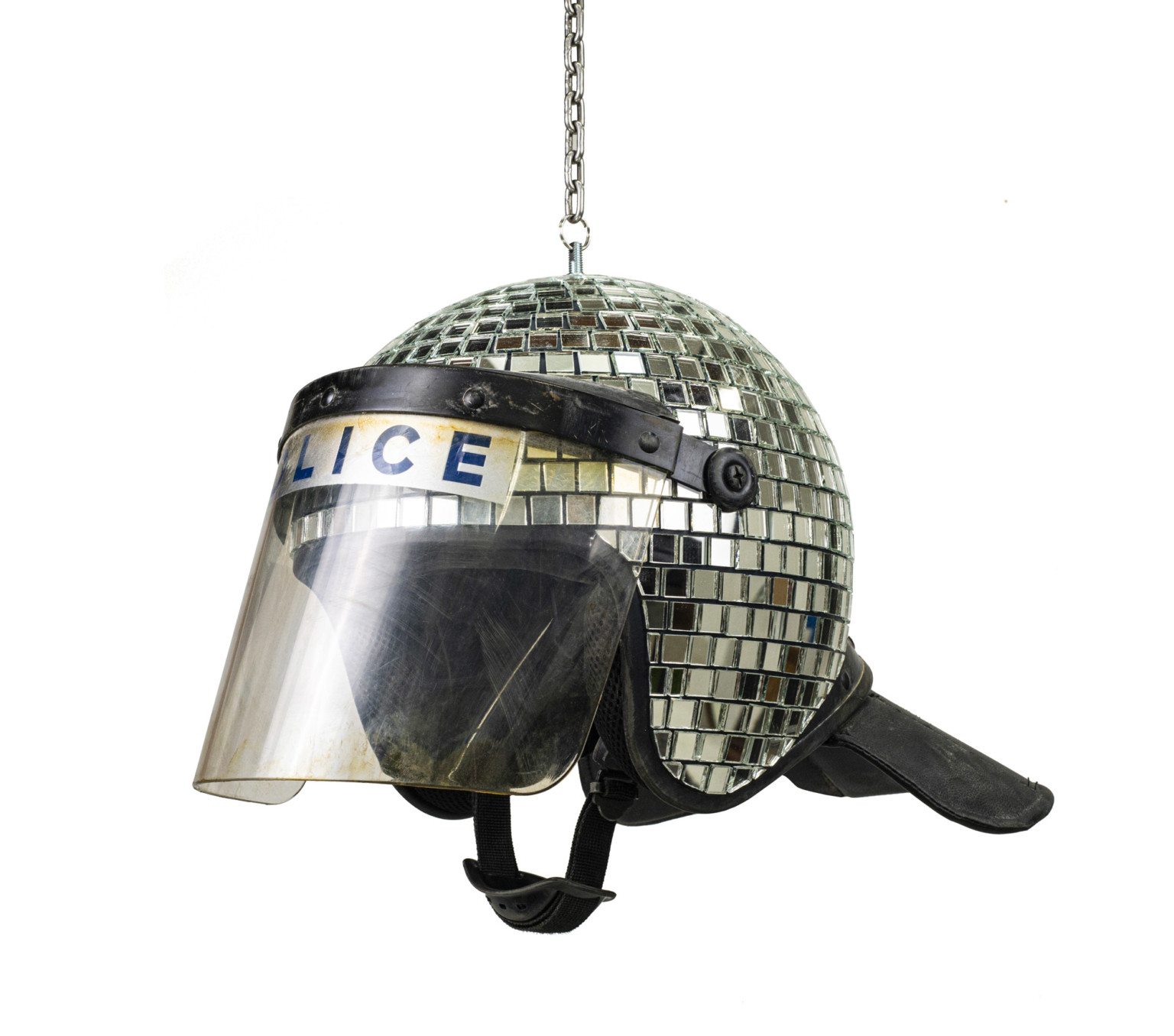
11 Dazzle camouflage
The future will ruin fashion! One day vintage will mean something different.
Confuse automated surveillance by being weird. (While at the same time attracting non-automated surveillance.) I have mixed feelings about this. Effective? Practical? I’m not sure. Fun? Probably.

12 Bluetooth is cursed
Do we really need Bluetooth? It’s probably not secure; turn it off if we don’t.
13 Incoming
How can we keep our data secret if a state actor is compromising the very hardware of the servers that store our information, or if network security in general is a disaster because of terrible, ubiquitous decisions? Note: even if we don’t buy the Bloomberg article, there’s no reason to suppose it won’t eventually be true.
- The Warrior-Witches of Ukraine’s Resistance - The Atlantic
- Recent infrastructure summary from perplexity seems reasonable
- CLOUD Act - What It Means for EU Data Sovereignty
- The Protesters’ Guide To Smartphone Security Zine : Jonah Aragon (text); Firestorm Books (layout) : Free Download, Borrow, and Streaming : Internet Archive
- NSA’s own Mac security advice
- Glitter nail polish for laptop security.
- Don’t leave your computer unattended, because things like PoisonTap mean that anyone who can get to our USB port can log into our websites.
- Prism break is a chaotic jumble of solutions for secure communication. Excellent reference, although it really needs to incorporate some idea of how popular its suggested solutions are; after all, most of these things are only of any damn use if our friends also use ’em.
- Quick guide to the basics of encryption (or how about one with stick figures?)
- Without a Trace: How to Take Your Phone Off the Grid – The Markup
- The WIRED Guide to Protecting Yourself From Government Surveillance | WIRED
- Is it safe to travel to the United States with your phone right now? | The Verge
- Crossing the U.S. Border? Here’s How to Protect Yourself